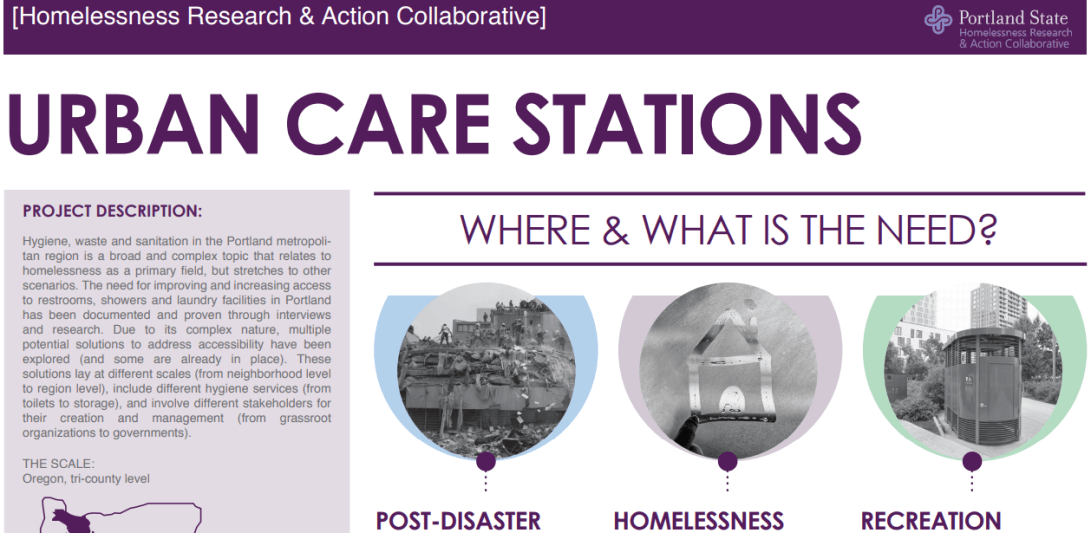
Hygiene, waste and sanitation in the Portland metropolitan region is a broad and complex topic with implications for public health, human rights, and justice. No other group faces the urgent need for hygiene and sanitation facilities greater than those experiencing homelessness. Other urban dwellers may one day face similar needs. The prediction of a pipe-breaking seismic event in the Pacific Northwest calls for greater planning to prepare for serving hygiene, waste and sanitation needs in a post-disaster scenario. Even recreational users can benefit from more frequent and more accessible facilities, which would make it more comfortable to travel further distances and stay longer at public parks.
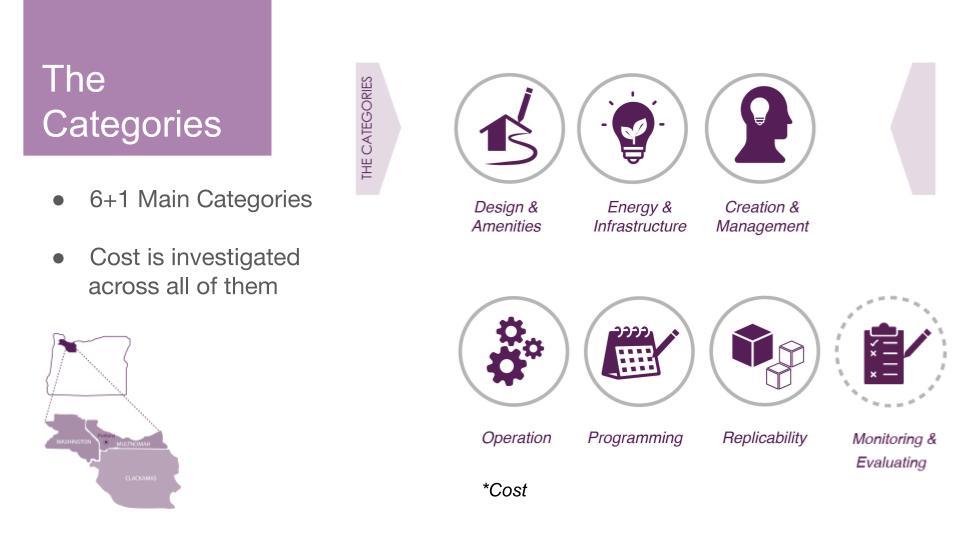
Research conducted among a summer graduate cohort at the Homelessness Research & Action Collaborative analyzed existing design and service solutions aimed at fulfilling the hygiene needs of unhoused populations due to experiencing homelessness pre- and post-disaster, as well as those serving recreational needs. Six categories of analysis were identified to evaluate existing solutions. Using this analysis, a design concept was proposed for Urban Care Stations, a low to no-energy use, composting, and water recycling facility that offers restrooms, showers, hand sanitation, laundry, and storage into one permanent structure.
Our work was presented as several conferences in 2019 and continues to germinate ideas at HRAC. Visit their website to read about our work and the work of other students engaging in the issue of homelessness.
Research: Sarah Mercurio, Ph.D. student, University Studies & Marta Petteni, Researcher and Architectural Designer
 sarah mercurio